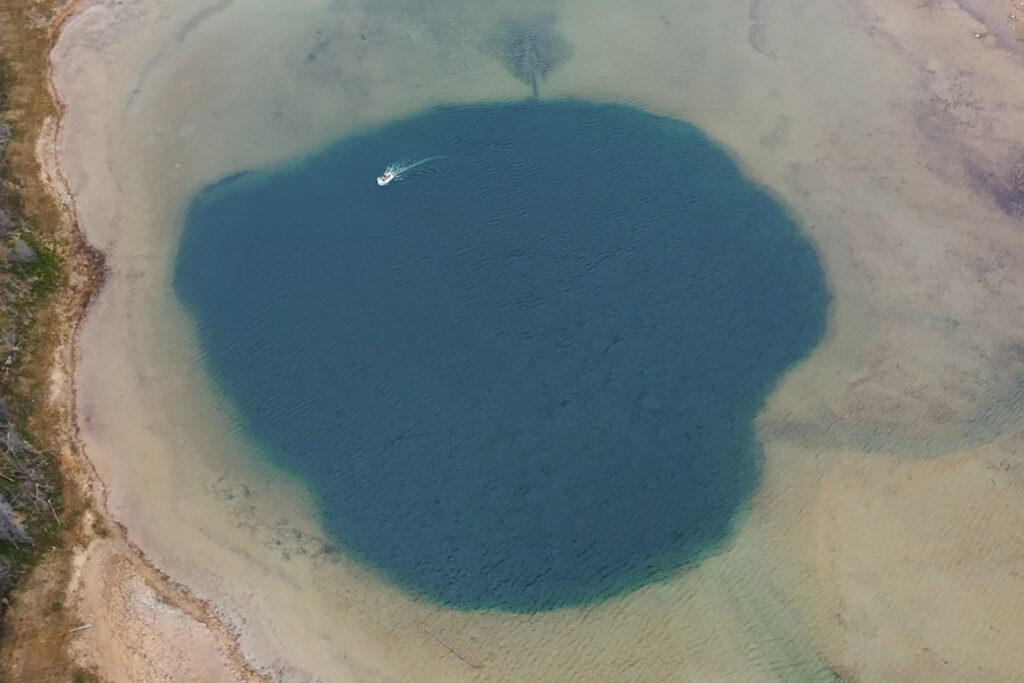
Alpena — The sinkholes in Alpena were formed when acidic water slowly dissolved the rock beneath the surface, carving out underground caves. Over time, the roofs of these caves collapsed, opening rare windows into a hidden world.
This sinkhole in El Cajon Bay is nearly 90 feet deep. Scuba diver Dusty Klifman and I suited up to explore it.
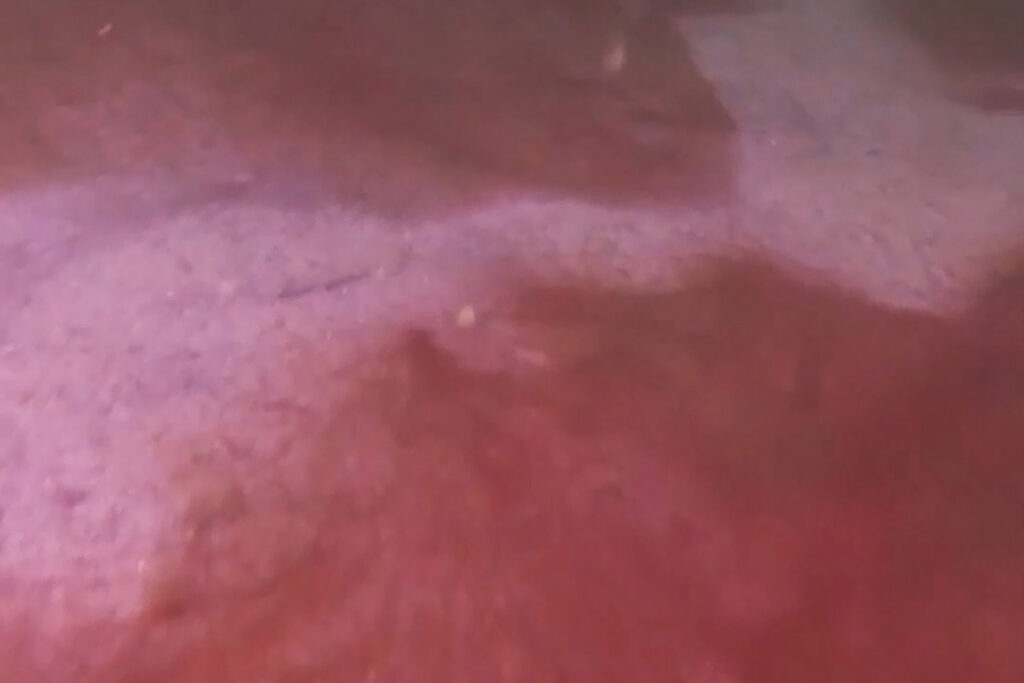
The sinkhole is fed by underground springs rich in sulfur and salt—different from the surrounding waters of the Great Lakes. Along the bottom, thick purple mats of microbial life cover the ground. These organisms don’t rely on sunlight or oxygen. Instead, they survive by feeding on sulfur from the springs
Ancient life like this first evolved long before Earth had an atmosphere. This Michigan sinkhole isn’t just a window into the Earth—it’s a window deep into time.
Coulter Stuart is a photojournalist who produces a nature series called “The Wild Where You Are.”