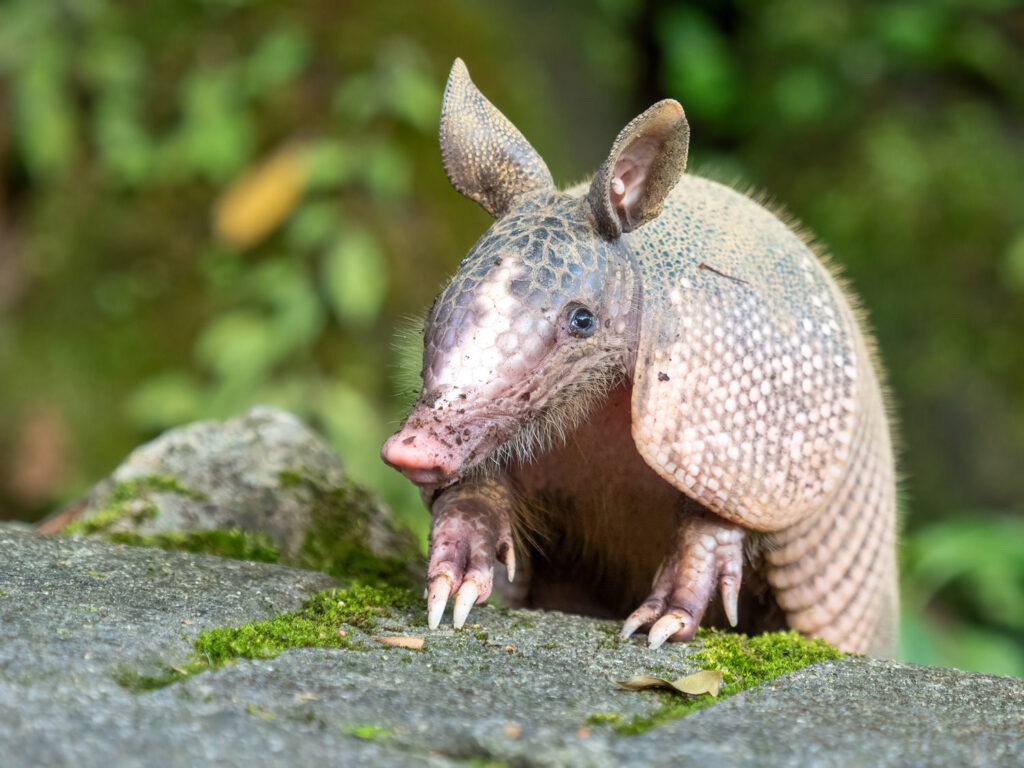
I’ve hunted tons of things in Michigan—deer, turkeys, bears, even a snipe when I was a kid. But I never thought armadillos would be an option.
Yet, here we are.
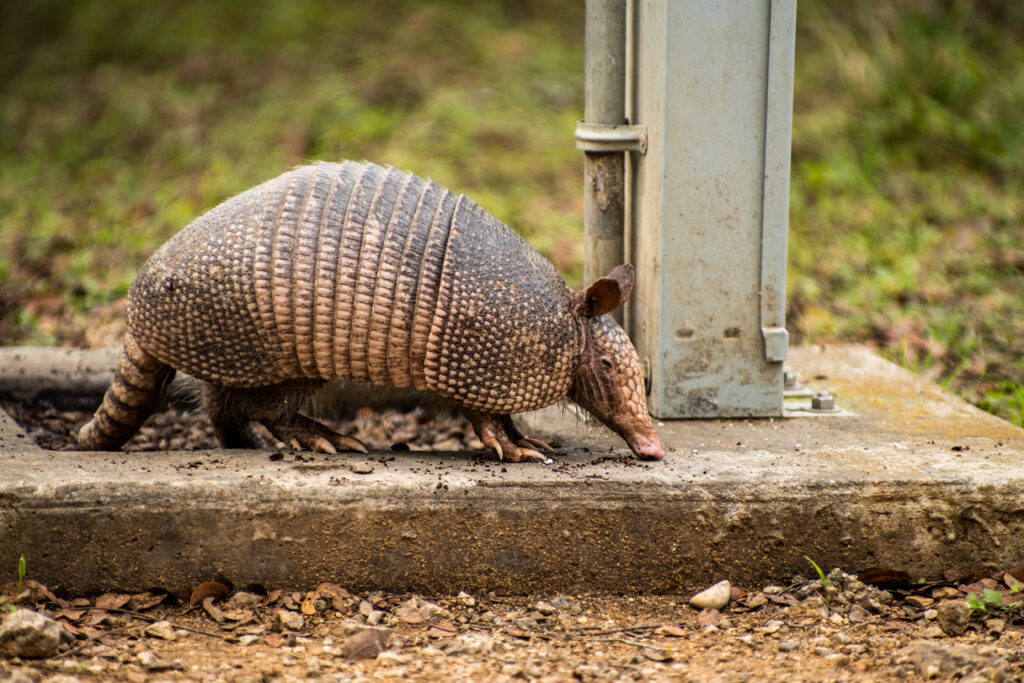
At a Natural Resources Commission meeting in January, Commissioner John Walters said he wants to start thinking about creating a hunting framework for armadillos before they actually establish themselves here. Not because they’re running amok in Michigan. They’re not. But because they might be someday, and Walters thinks we should get ahead of it.
Are armadillos actually here right now? Probably not.
Between 1989 and 2022, the DNR confirmed six armadillo reports in Michigan. Five were roadkill samples from scattered counties, including two from Ottawa and one each from Ionia, Luce, and Saginaw. The sixth was a photo posted on iNaturalist from Sanilac County, though one researcher said he heard it was a prank.
No one has ever confirmed a live wild armadillo in Michigan.
But you never know. For decades, people reported seeing cougars in Michigan and the DNR insisted they weren’t here. Sightings were dismissed as misidentifications, escaped pets, anything but wild cats. Then in 2024, trail cameras caught cougar cubs in the Upper Peninsula. First confirmation in over a century. Turns out the people reporting sightings weren’t crazy after all.
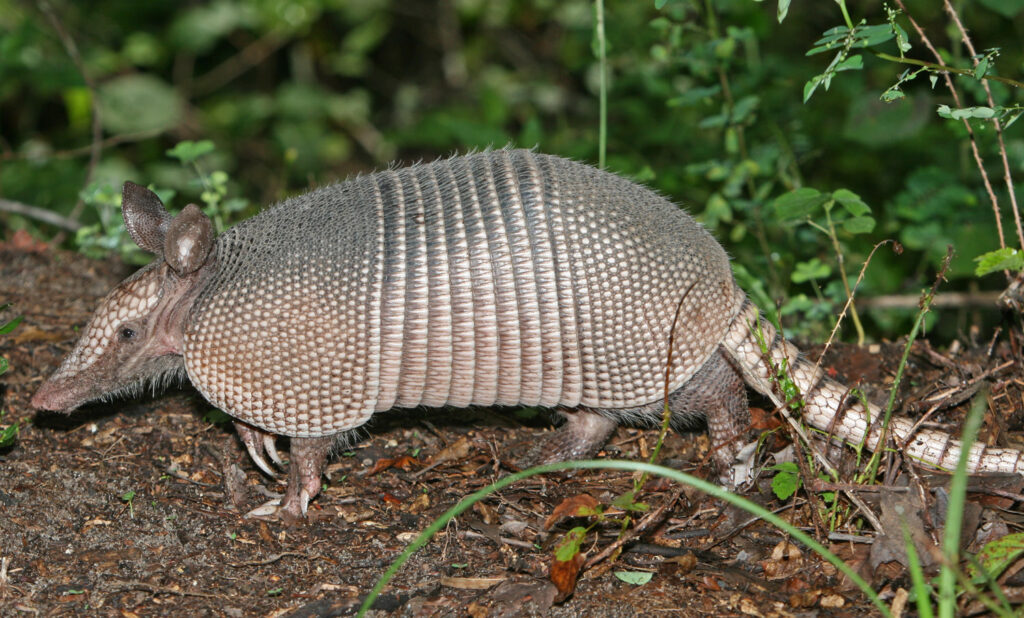
The DNR believes those six armadillo specimens were probably brought here from other states and dumped. “All of these are suspected of being picked up in a different state and discarded in Michigan, but we don’t have definitive proof of that,” DNR Specialist Cody Norton said.
If armadillos were naturally walking into Michigan, you’d expect to find them in the southern counties near Indiana and Ohio, where breeding populations already exist. Instead, these specimens turned up all over the state, including the Upper Peninsula. That doesn’t make sense for natural migration, unless they truly slipped by undetected.
Armadillos have been creeping north for decades. They started in Mexico in the 1840s, made it to Florida by the 1920s, and now they’re established in Illinois, Indiana, and Ohio. Warmer weather patterns have helped them expand their range.
But Michigan’s winters are still a major obstacle. This winter in particular has been brutal. Single-digit temperatures for weeks, deep snow, the kind of cold that kills anything not built for it. Ryan Wheeler, an invasive species biologist for the DNR, said that, while armadillos keep showing up somehow, “There’s nothing that we can point to to say, ‘Yes, armadillos are here, they’re reproducing and we have a resident population.'”
With the winter we’re having, it’s hard to imagine armadillos surviving here anytime soon. But weather patterns shift. Mild winters become more common, cold snaps become less severe, and suddenly animals that couldn’t make it here before start showing up. It’s happened with other species. Could happen with armadillos.
When that happens, we’ll have a problem.
Armadillos dig constantly. They tear up lawns, gardens, and golf courses, hunting for grubs and earthworms. Their burrows under decks and can damage buildings. And here’s the attention-grabber: They carry leprosy. Yes, the disease you read about in the Bible. Transmission to humans is rare, but it happens. About 150 to 250 cases are reported in the U.S. each year, and contact with armadillos is a known risk factor.
Unlike deer or turkey, there’s no hunting tradition around armadillos. They’re a nuisance animal, not a game species. But that doesn’t mean hunters can’t help manage them.
Walters’ idea is simple: Create the regulatory framework now so that if/when armadillos do establish breeding populations in Michigan, hunters can do what they love.
It’s a preemptive approach. Instead of waiting until armadillos become a crisis, build the infrastructure to handle them while they’re still theoretical.
I like that thinking.
We’ve seen what happens when Michigan waits too long to respond to invasive species. Asian carp in the Great Lakes, emerald ash borer in our forests, feral pigs in the north. By the time we react, the problem is already out of control and expensive to fix.
If the framework exists and hunters are allowed to take armadillos on sight, that’s free pest control. No taxpayer-funded eradication program. No hiring contractors. Just Michigan hunters doing what we already do.
Earlier this year, the Michigan Legislature introduced House Joint Resolution C, a proposed constitutional amendment to protect hunting and fishing rights. If it passes and goes to voters, it would enshrine hunting as a constitutional right in Michigan, not just a privilege the state grants.
An armadillo framework would fit that model. It treats hunters as part of the wildlife management solution, not just people who buy licenses and follow rules the DNR hands down.
Let’s be honest. I’m probably not hunting a Michigan armadillo anytime soon. If they do arrive, it’ll be a few scattered animals, not a thriving population.
But I appreciate that someone on the NRC is thinking ahead. Nature is full of surprises. New species, new diseases, new problems we didn’t see coming. If the playbook is to create regulatory frameworks before the crisis hits instead of after, I’m on board.
If armadillos do show up, I’ll be ready. It’s time I had some armadillo taxidermy on my bookshelf.
James Zandstra is an experienced outdoorsman with a passion for the Mitten State. Follow his work on X @TheFairChase1.