The post office is a place to buy stamps, ship boxes, and learn that nobody can locate your package even though you have a tracking number. In Michigan, about three dozen also serve as art museums: They display big murals painted in the late 1930s and early 1940s. And they are everywhere, from the southeastern village of Blissfield to the northwestern reaches of Iron Mountain.
These murals were part of a national effort to commission new art for public spaces. Most of them try to reflect the history, culture, and people of their communities. In 1941, President Franklin Delano Roosevelt judged their achievement: “some of it good, some of it not so good, but all of it native, human, eager, and alive—all of it painted by their own kind in their own country, and painted about things that they know and look at often and have touched and loved.”
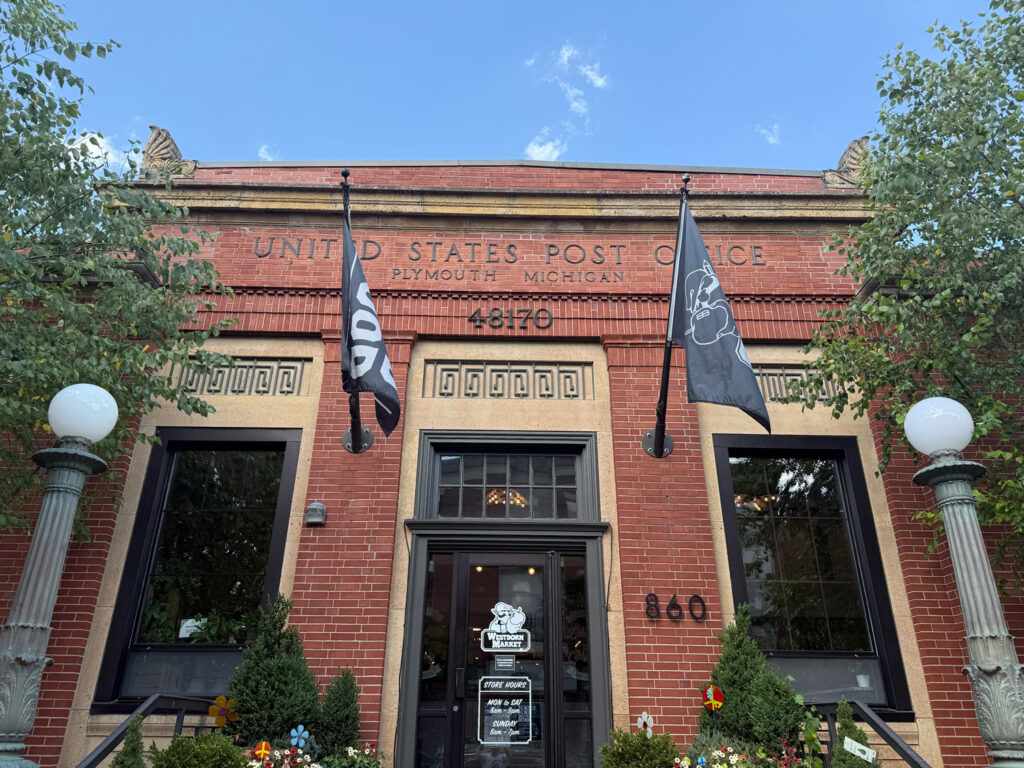
Putting murals in post offices made sense at the time. “Post offices were hubs of community activity where people routinely visited and congregated,” writes John P. Murphy in his new book, “New Deal Art.” “There were also a lot of blank walls to fill: three times as many post offices were built in the 1930s as in the previous fifty years.”
As I drive around Michigan, I now include post-office murals on my travel itineraries. Here are my three favorites so far.
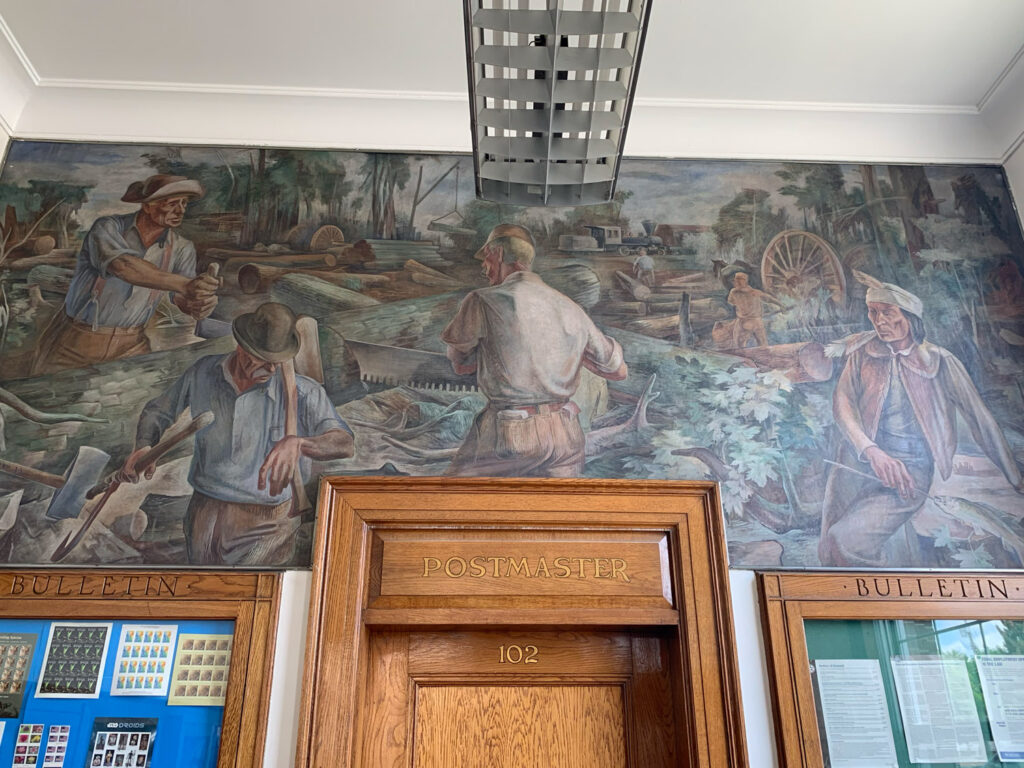
Grayling: “The Lumber Camp” by Robert L. Lepper
This mural is a sentimental favorite because seeing it for the first time woke me to the fact that not every post office needs to have a drab and utilitarian interior. This one depicts the most important environmental event in Michigan’s modern history: the logging of old-growth forests. I especially like the man in the Derby hat, with his eyes hidden but his drooping white mustache visible. The artist, Robert L. Lepper, was a Pennsylvanian who taught at the Carnegie Institute of Technology, where one of his students was a young Andy Warhol.
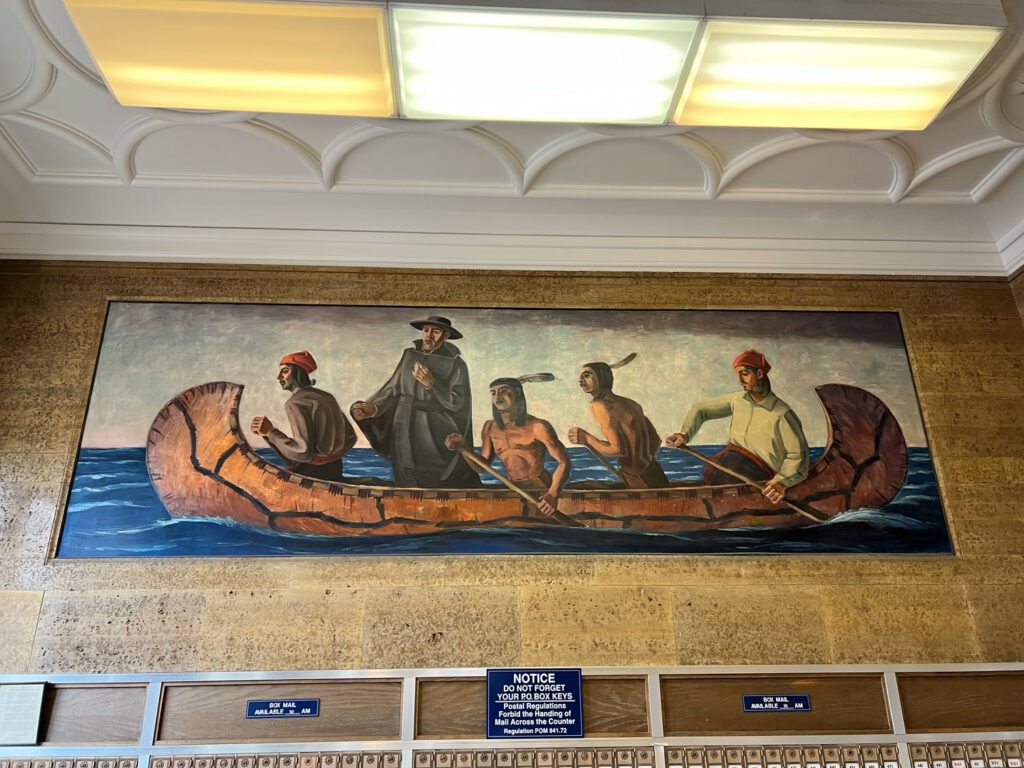
Marquette: “Marquette Exploring the Shores of Lake Superior” by Dewey Albinson
The French priest Jacques Marquette gave Michigan and the other Great Lakes states one of their most familiar place names. The city of Marquette in the Upper Peninsula was named after him in 1850. This mural shows the brave explorer and Catholic missionary as he stands in a canoe. French and Indian paddlers push him across blue waters. The red tuques on the heads of the Frenchman provide a pleasant burst of color. The artist, Dewey Albinson, was born to Swedish immigrants in Minnesota.
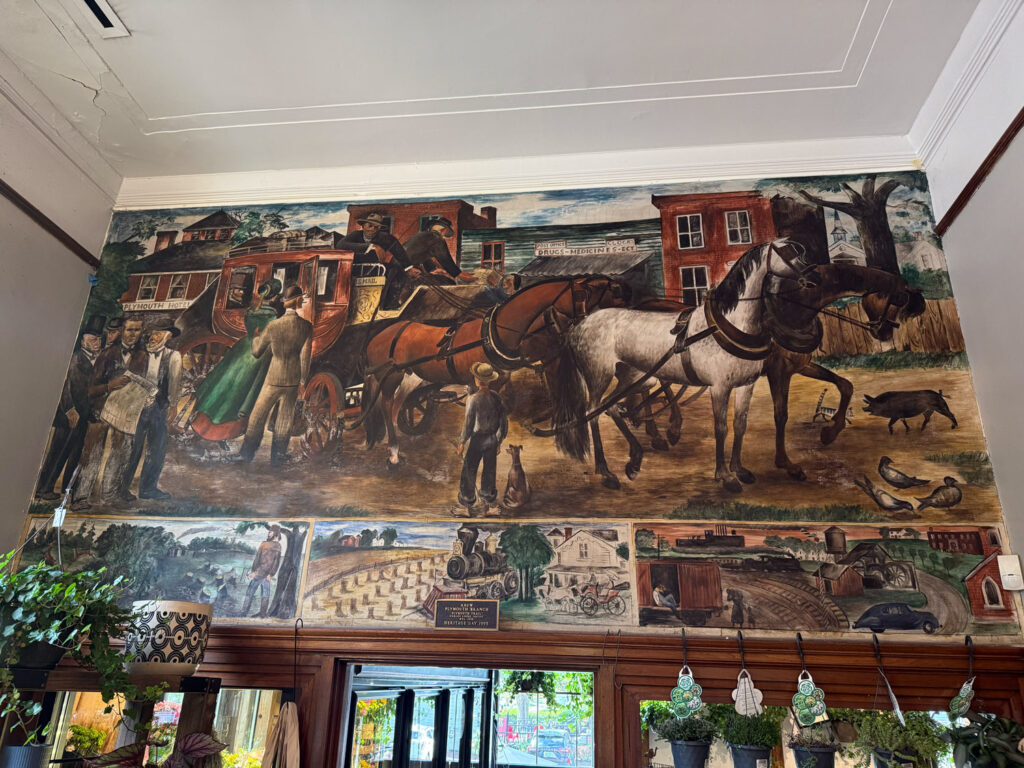
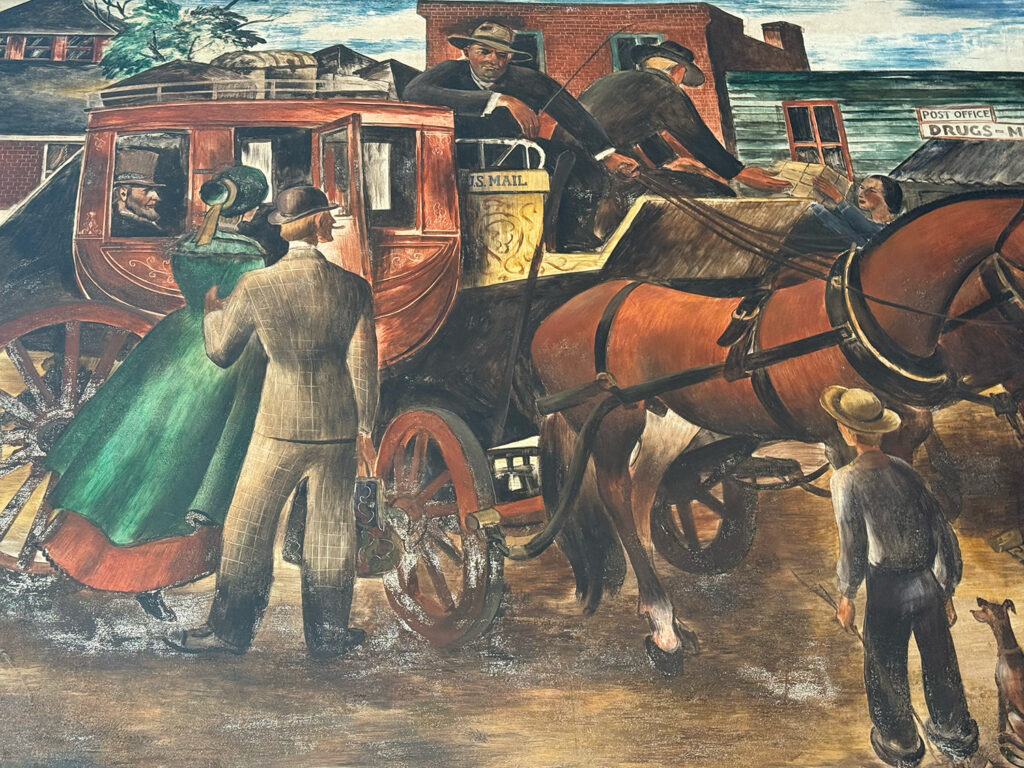
Plymouth: “Plymouth Trail,” by Carlos Lopez
This is four murals in one: a big panel atop three smaller ones, with themes of settlement, transportation, and development. The longer you look, the more you see. My favorite detail is a gray tabby cat who approaches a pig near the feet of stagecoach horses. The artist was born in Cuba but moved to Michigan as a boy. This mural is in Plymouth’s old post office, which is now Westborn Market, a grocery store. The new post office, across the street, is a featureless reminder that we can’t take beauty for granted.
Plan Your Own Post Office Tourism
A website hosted by the University of Michigan offers a handy map. Other helpful websites include Living New Deal, which seeks to catalog the art and architecture of the New Deal in Michigan and everywhere else in the U.S., and Post Office Art, which has excellent photos.
John J. Miller is director of the Dow Journalism Program at Hillsdale College. His personal website is Heymiller.com.