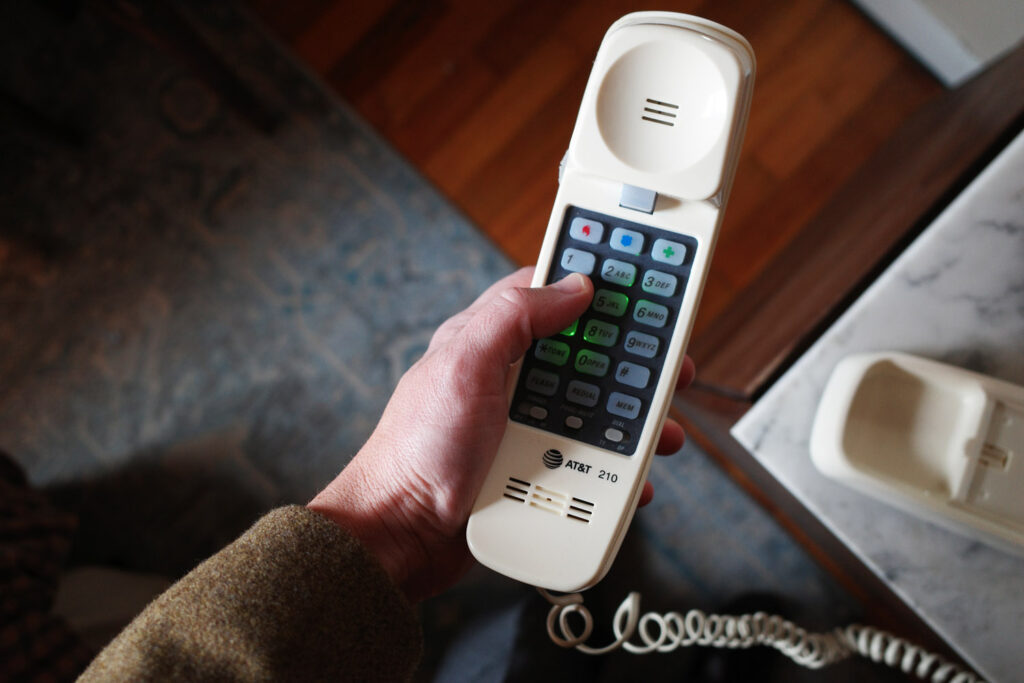
Petoskey — Remember the phone? No, not the iPhone. The one that was screwed into the wall next to the refrigerator. The one with a long curly cord that was always tangled in a knot. The one on the end table in the living room right next to the couch. The one that was right in the middle of the house so even when you tried to get a little privacy you couldn’t. You’d pull the cord as far as it could be stretched, cradling the phone right next to your ear so you didn’t have to talk very loud, trying hopelessly to get alone.
If you are under a certain age, of course, you most likely aren’t able to answer the phone at all due to crippling social anxiety brought on by the fact that you didn’t grow up with a landline. You never had to run the gauntlet of answering the phone and hearing another person breathing on the other end, calling a girlfriend up and having to ask her dad if she was home, or taking a message for your mom when she was out.
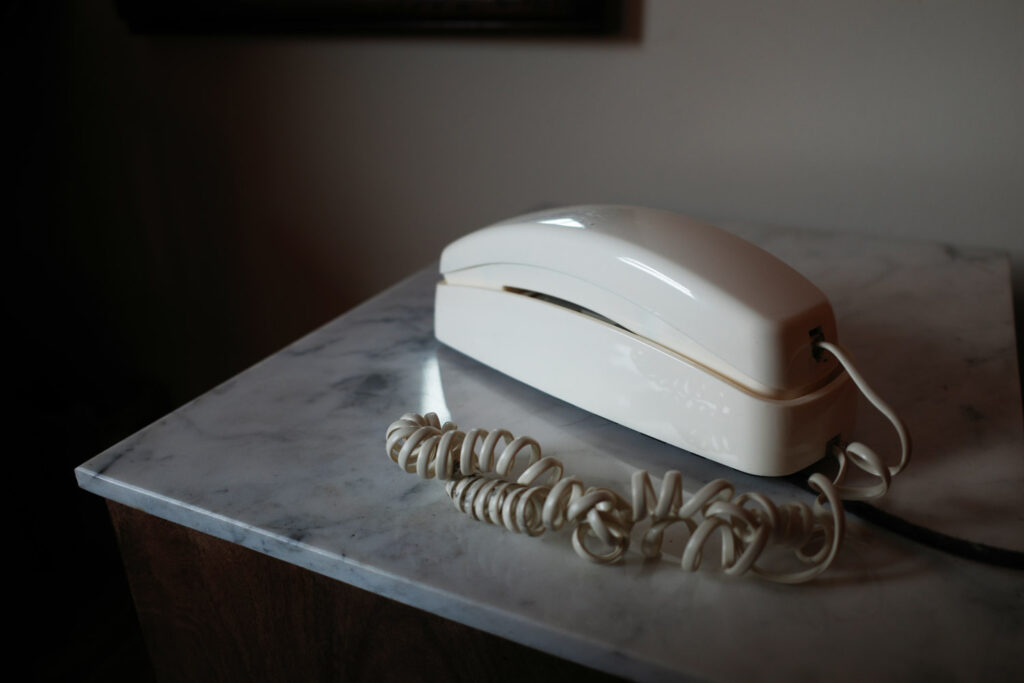
I think about landlines a lot. It sounds like a strange thing to mull over in 2025. Aren’t we all using iPhones now? Isn’t it easier to text and rely on Google Maps? Isn’t it more convenient when we can carry the world in our pockets? And isn’t the landline dead anyway, by the way?
It’s true that it’s just about impossible to get a real bonafide landline these days. In many places you can’t get a phone that is connected to other phones by way of physical wiring that runs through the walls. But it is possible to get a faux landline. And why would the actual wiring matter anyway? What matters is talking on a phone that isn’t an iPhone.

If you want to get a landline today, it’s pretty easy and pretty cheap. You just sign up with a service like Ooma, Voiply, or AXVoice, and five days later you get a device in the mail that you plug into your modem, then you run a cord from that device to any kind of phone you want. You can get a wireless phone that feels like 2000, one with glowing buttons that feels like 1993, or one with a rotary dial that feels like 1963. The choice is yours, but what matters is you have a phone that rings when someone calls. You can’t silence it, you can’t set it to vibrate, and you can’t put it in your pocket.
It’s less convenient than an iPhone, that’s for sure. But that’s part of the point. It’s not unreasonable to suggest, like I did earlier, that early adoption of private phones by young people has given rise to a generation of socially maladapted young people with strange forms of anxiety that would have been unrecognizable in the landline era. It started with computers in your bedroom—something my parents never allowed—and it moved to private computers in your pocket. The theory was that it would make us more connected, but it didn’t.
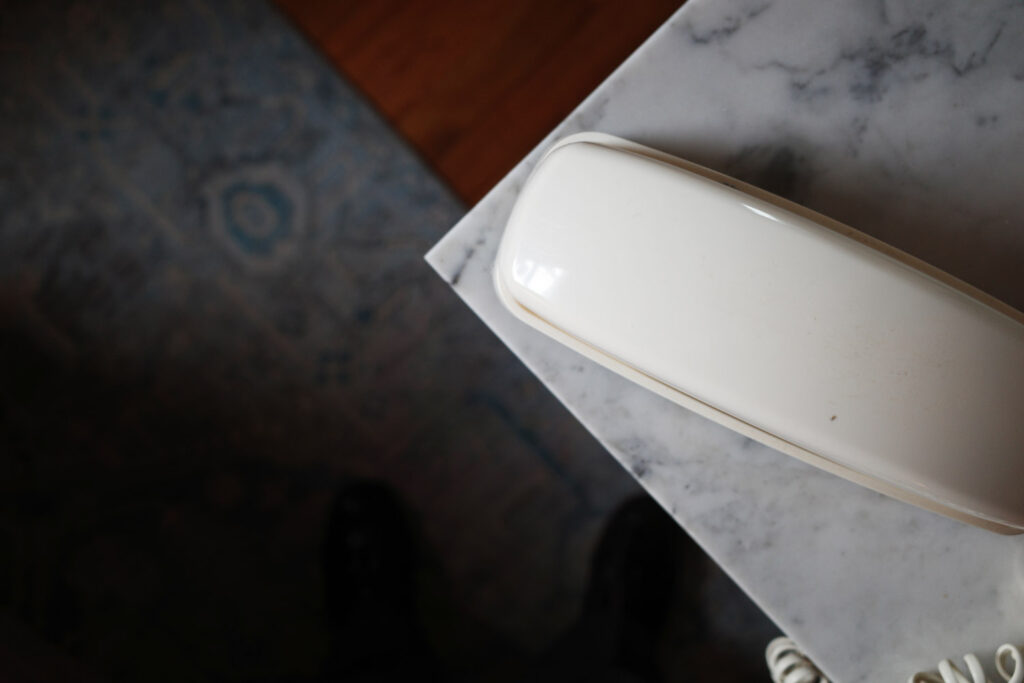
Being forced to talk on the phone is, oddly, good for us, especially at a young age. Those who grew up with landlines take this for granted, but talking on the phone is not a skill we are born with. We have to learn it by doing it. We have a landline in our house and watching my kids talk to their grandparents on it has enlightened me to this fact. They can’t really do it so well. They don’t know what to say. They don’t know how to keep the conversation going. They don’t have this problem when looking at their faces in real life, but on the phone, hearing only voices, they struggle with coherent conversation. Ideally, their exposure to the landline in our house will help teach them the skills of taking on the phone so they don’t end up like the 20-year-olds who can’t leave a voicemail or answer a call without being stressed beyond belief.
Another odd or forgotten benefit of the landline is the ability to be reached in case of an emergency. If you are like me, you probably silence your phone in the middle of the night. You probably silence it at various times in the middle of the day too. We, as a family, go offline every Saturday. It’s a nice thing to be able to do, but what if there is an emergency? You can’t silence the landline. If someone truly needs to get ahold of you, they can. It works, as long as everyone doesn’t have your number.

Another lovely benefit of the landline is one of aesthetic preference. One of the most depressing things about smartphones is the fact that they all look exactly the same. It seems that every maker has converged on the exact same design: a sleek black rectangle. It’s kind of dull and inhuman. With the landline, you can have a little fun. You can have a little style. You can buy a pastel rotary on oldphoneworks.com or you can find something that feels like 1989 at a Goodwill for $7.
Lastly, it’s just more fun to talk on a landline. Holding the iPhone in your hand is not really very pleasant. It’s this dinky little slick brick that you clutch with your fingers hoping that it won’t fall. On the other hand, grasping the receiver of an old phone feels good. Sitting with your elbow on the table and the clunky receiver against your palm, leaning against the fridge with the receiver sandwiched between your shoulder and your ear, manhandling the bottom bulbous end where you talk while taking a note with your other hand. All of this all feels so much better than talking on a dinky iPhone.
The landline is seemingly outdated in our era of FaceTime and DMs, but it deserves to make a resurgence. It’s better for kids, better for emergencies, it’s more aesthetically pleasing, and it’s just more fun to use.
It’s time to return to tradition, and return to the landline.
O.W. Root is a writer based in Northern Michigan, with a focus on nature, food, style, and culture. Follow him on X @owroot.