Bitely — Nestled along the Manistee National Forest, down a quiet road in Bitely, is one of the most surprising collections in North America—The Wildlife Center at Legends Ranch.
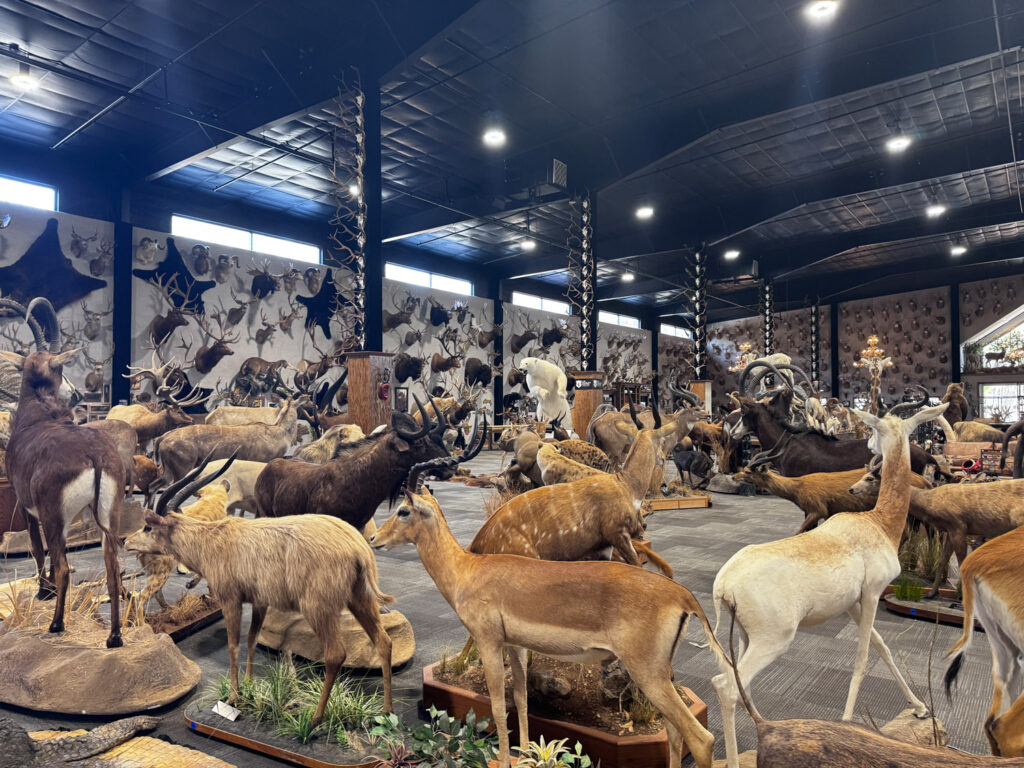
The 24,000-square-foot nonprofit facility is home to the largest private taxidermy collection on the continent.
That’s right. It’s not inside a Cabela’s, but right here in rural West Michigan.
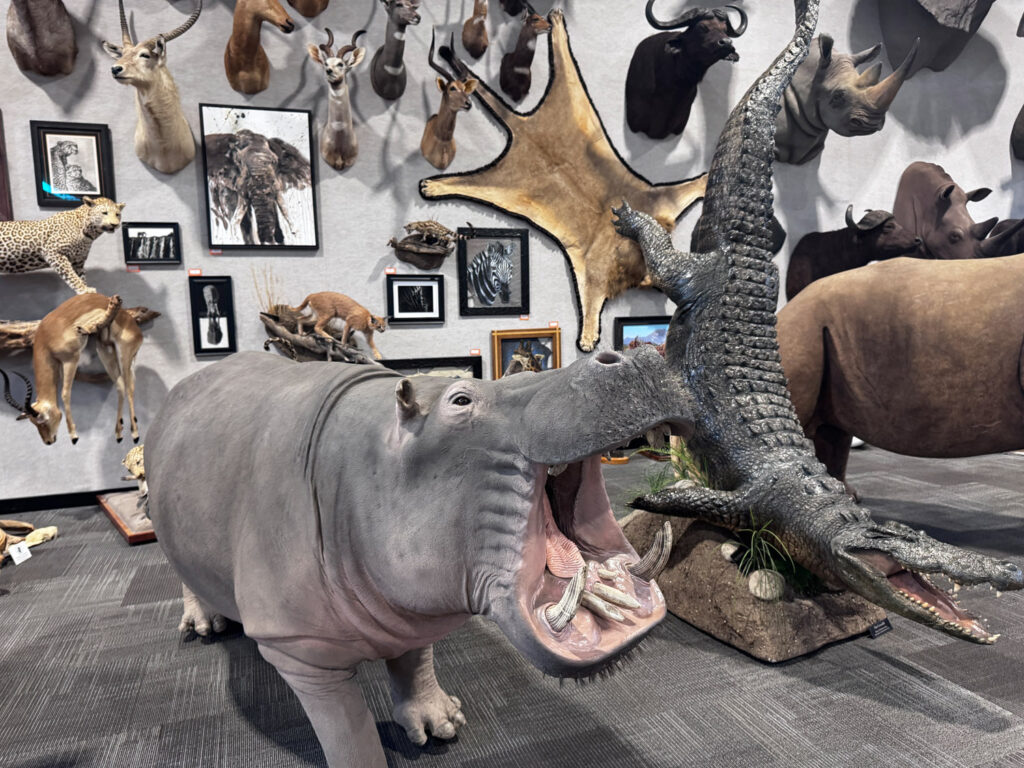
The Wildlife Center is home to more than 3,000 taxidermy animals from around the world, bringing wildlife and conservation to life for thousands of students each year.

The center was founded by Arthur Gutierrez, Sr., an adult-onset hunter who didn’t begin hunting until his 50s. Once he started, he spent the next several decades traveling the globe, harvesting ethically, and preserving animals as part of his mission: to teach people why hunting is an important part of conservation.
The moment you step into the building, you’re met with the gaze of hundreds of eyes, pointing antlers, and countless species staring back.
“The reactions are priceless,” says Tony Grimard of The Wildlife Center. “It’s overwhelming and we like that.”
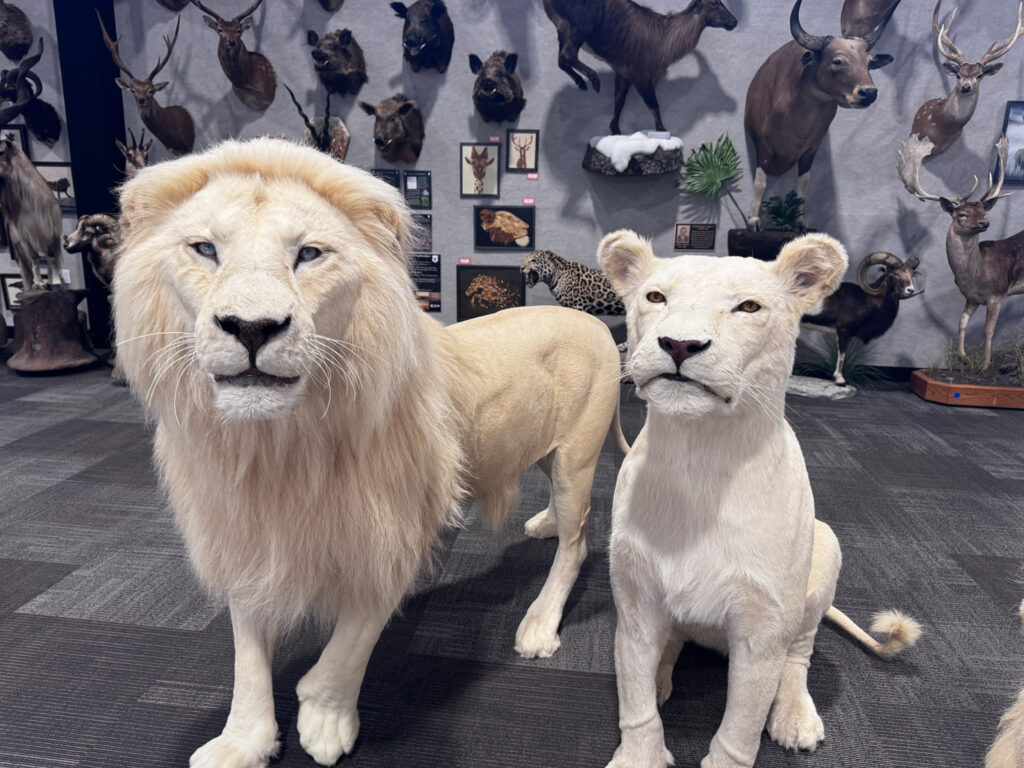
About 75% of the animals are from Arthur Gutierrez and the rest from other family, mostly his grandson, Robert Sergi, director of Legends Ranch and The Wildlife Center.
You can explore species from every continent up close, and, of course, there are entire walls dedicated to Michigan’s famous whitetail deer.
Everywhere you look are pieces of art and sculpture celebrating America’s natural resources and beauty. One of my favorites is a giant Michigan map with each county represented by a hand-cut Petoskey stone.
Each year, thousands of students from Michigan visit The Wildlife Center on free field trips to learn about the role ethical hunters play in preserving the very animals represented in the collection. Transportation is provided, and students are immersed in 15 curriculum stations, from biology and wildlife to history and even the economics of conservation and hunting.
“As hunters and stewards of wildlife, it’s in our best interest that animals continue to thrive and are here in the future. Educating the next generation is a big part of that.”
There are many ways to visit or get involved at The Wildlife Center. You can checkout their annual fundraising wild game dinners, participate in their first-time hunter programs, and more.
This month I’ll be hosting the first “Women Hunt’s Mama Bear Field Camp” at the Wildlife Center and Legends Ranch, bringing together 12 mothers and daughters from around the country to learn hunting, conservation, field skills, and fellowship in the outdoors. You can keep an eye on the website for more information about upcoming programs.
Emily Richett is a mom of four, former news reporter, podcaster, and author of “Mama Bear Survival.”